Japan has traditionally maintained one of the strictest armament export policies in the world, which has for the most part prevented Japanese defence companies and government agencies from exporting or even donating military equipment to other countries. The fact that the Japanese government amended its own guidelines to bypass laws that would otherwise have prevented it from supplying Ukraine with military aid should thus be seen as highly exceptional. Although the resulting deliveries have remained limited to non-lethal equipment, the move to supply war-torn Ukraine with military equipment is unprecedented in Japan's modern history. Military aid has so far included 40 small reconnaissance UAVs, 6900 helmets and 1900 bulletproof vests.
In addition to supplying Ukraine with large volumes of armament, Germany has also attempted to entice other countries to send their heavy weaponry to Ukraine in a programme known as 'Ringtausch' (which roughly translates to 'circular exchange'). Under this policy,
countries can receive German armament free of charge in exchange for delivering tanks and infantry fighting vehicles (IFVs) from own stocks to Ukraine. Although this seemed a promising scheme at first, the 'Ringtausch' programme has largely
failed to live up to expectations as most countries expect to have their
Soviet-era systems replaced by larger numbers of modern weapon systems than what Berlin is currently able (or willing) to offer.
Finland is renowned for being the happiest country in the world, having the world's best education system, coolest (former) Prime Minister (Sanna Marin), and not feeling the need to brag about help given to other countries. The latter has made an accurate analysis of Finnish military support to Ukraine relatively difficult. What is known is that Finland pledged its first shipment of military aid already by February 27. Since then, at least fifteen more batches of military aid have reached Ukraine. [1] By May 2023, military aid from Finland was worth more than €1.1 billion. [2]
The goal of this list is to comprehensively catalogue the current inventory of drones, rockets and missiles of the Houthi rebels as well as clarify their origin. The part within apostrophes refers to the designation given by Houthis to foreign-delivered equipment. A year in square brackers after the designation refers to its perceived date of inception in Yemen. The year is only added to armament delivered or produced after the Houthi takeover of Yemen in 2014/2015.
(Click on the equipment to get a picture of them in Houthi service.)
As many observers of the Russo-Ukrainian War are awaiting the possible debut of Iranian drones with the Russian Armed Forces, relatively few know that Iranian-made and Iranian-procured armament is already in active use on the battlefields of Ukraine since at least April 2022. Rather than being used by the Russian Army, these weapons systems are deployed by Ukrainian forces in their fight against the Russian Army. The story of how these weapons ended up in Ukraine is perhaps just as fascinating as the fact of their actual presence in Ukraine, and requires us to first delve into the topic of Iranian arms trafficking to Yemen and the efforts of Western countries to combat it.
It
is not often that a weapon system is proving so popular that
countries are waiting in line to buy it. Ironically, this appears to be
the current situation with the Bayraktar TB2 unmanned combat aerial
vehicle (UCAV). Already in service with or on order by 31 countries
other than Türkiye, the TB2's commercial success currently looks to be
without bounds. With new export agreements being signed with more
countries to this day, there is little doubt that the TB2 will go down in history as world's most successful UCAV both in
terms of export clients and numbers sold. In this capacity it is now
consistently beating its main two competitors on the drone market of
China and Israel, whose products though more attractive than expensive
(and exclusive) Western wares or underperforming and politically-laden
Iranian ones have shown their own deficiencies. The TB2's successshould come as little surprise to those that examined the system in
combat, as the TB2 is arguably the first UCAV that manages to combine
reliability and affordability with devastatingly effective results on
the battlefield: a capability keenly looked for in the 21st century.
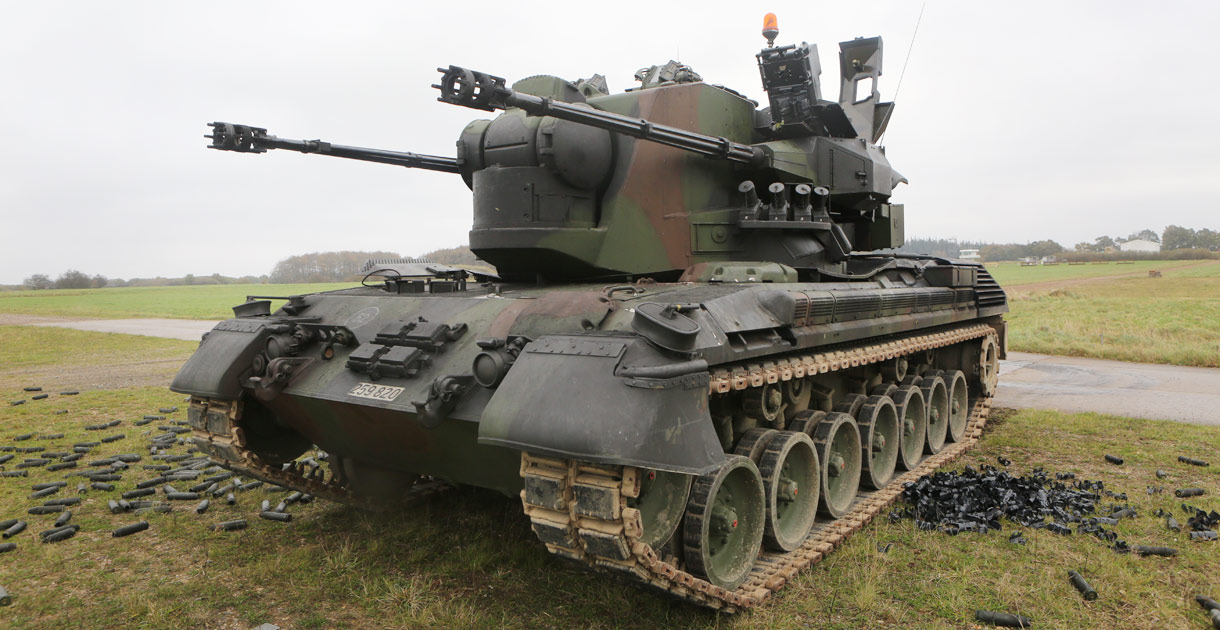
Contrary to popular perception, Germany has delivered significant amounts of arms and equipment to Ukraine to aid the country in its fight against the Russian military. In
fact, the volume of arms deliveries by Berlin exceeds that of every other country safe for the United States. Nonetheless, Germany has faced severe criticism and even mockery for its perceived lack of support to Ukraine and
its ill-fated attempts to keep its relationship with Moscow intact. While ultimately positioning itself as a reliable partner of Ukraine, it can be argued that Berlin's communication to affirm its Ukraine stance and explain foreign policy goals has been nothing short of an unmitigated disaster.