Tuesday, 4 January 2022

,

By Stijn Mitzer

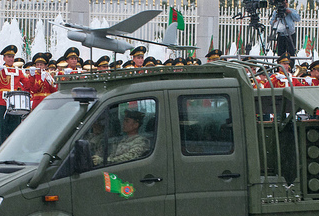
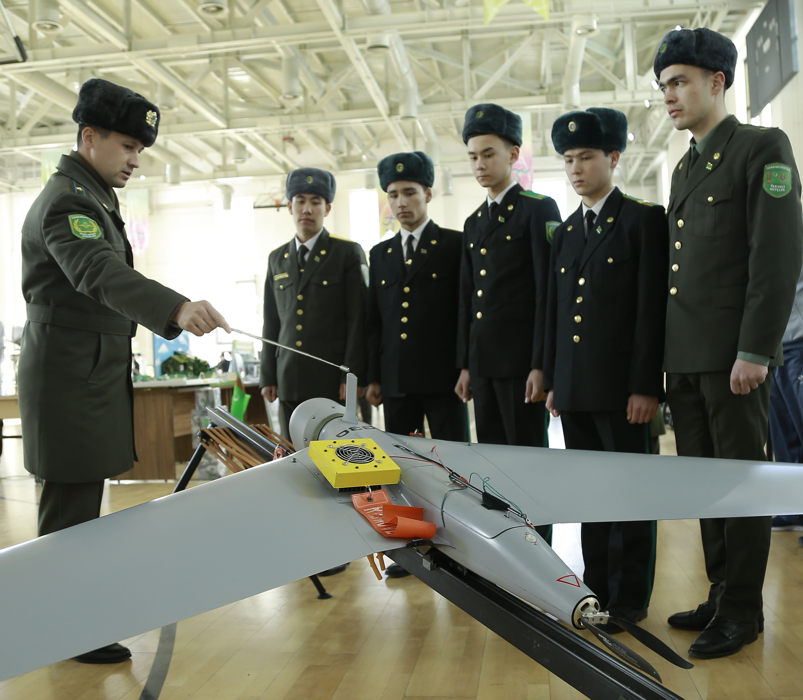
Turkmenistan is a large recipient of Israeli arms and equipment, so far including weaponry like the TAR-21 assault rifle and several types of infantry mobility vehicles (IMVs). Arguably lesser known is Turkmenistan's inventory of Israeli-produced unmanned aerial vehicles (UAVs). This until 2021 consisted of familiar types like the Elbit Skylark and Aeronautics Defense Orbiter 2B, both solely used for reconnaissance missions. These were acquired in the early-2010s, presenting Turkmenistan's first UAVs that were not target drones inherited from the Soviet Union.

Thursday, 30 December 2021

,

By Stijn Mitzer and Joost Oliemans
 
These days Turkish-designed naval vessels ships operate with navies all around the globe as Turkey is rapidly on the way towards attaining near self-sufficiency in the naval sector. As part of this ambitious strive, Turkish shipyards have an ever expanding portfolio of naval ships on offer. When in 2013 Turkey launched a tender for a new class of fast attack craft (FAC) to replace the ones currently in Turkish Navy service, it could make a selection out of close to 30 domestic designs, showing that the scope of the country's naval design craze can hardly be overstated. [1] [2]

Wednesday, 29 December 2021

,

By Stijn Mitzer and Joost Oliemans
  
That Turkish-made unmanned combat aerial vehicles (UCAVs) and Israeli-designed loitering munitions enabled Azerbaijan its striking victory during the 2020 Nagorno-Karabakh War is well established. Less well known is that in addition to Bayraktar TB2 UCAVs and Israeli-designed loitering munitions, Azerbaijan operates a large fleet of Israeli-made surveillance UAVs that by the virtue of their capabilities rank amongst the most advanced in the world. The synergy between this extensive arsenal of UAVs, loitering munitions and UCAVs has meanwhile propelled Azerbaijan to the world's top in terms of unmanned aerial capabilities.

Tuesday, 28 December 2021

,

By Stijn Mitzer and Joost Oliemans

Egypt has a long tradition of acquiring military equipment from a multitude of sources rather than solely relying on one country in case it's suddenly to be sanctioned, potentially cutting off its military from spare parts and munitions. The Egyptian Air Force currently operates jet aircraft sourced from Russia, France, Czechia, the U.S. and China, and the situation is little different within the other branches of the Egyptian Armed Forces. Although greatly complicating the inventory of spare parts and weaponry, this situation ensures that Egypt is never without a source of armament.

Tuesday, 21 December 2021

,

 
By Stijn Mitzer and Joost Oliemans
 
The Indonesian National Armed Forces are responsible for patrolling an archipelago of 17,000 islands that extend 5,150 kilometers from east to west. For this purpose, it operates a large number of patrol craft and maritime patrol aircraft to keep tabs on illegal entries and activities occurring within its territorial waters. Nonetheless, the sheer size of the archipelago, not to mention the land mass of the islands as well, makes it difficult to monitor. One other way this can be effectively achieved is through the deployment of large numbers of medium-altitude long-endurance MALE UAVs.

Sunday, 19 December 2021

,

By Stijn Mitzer and Joost Oliemans
 
In the 2010s, Armenia embarked on an expansive modernisation programme of its air defences to keep up with Azerbaijan's expanding drone arsenal and to address the obsolescence of its existing surface-to-air missile (SAM) and radar systems. Although acquisitions like the Tor-M2KM and Buk-M1-2, and Russian jamming equipment such as the Repellent-1 and Avtobaza-M would attract the most attention, overhauls and upgrades performed to its older systems occurred as well. This included SAM systems like the 2K11 Krug, 2K12 Kub and the S-125, all of which dated from the 1960s.

Saturday, 18 December 2021

,

By Stijn Mitzer and Joost Oliemans
 
Türkiye has made a shift from being partially dependant on donations of military equipment in the 1970s and 1980s to being the party that donates in the 2010s and 2020s, gifting military equipment to allied countries around the globe. Although Türkiye began donating military equipment to neighbouring countries as early as the late 1990s, this policy truly set off in the 2010s as Türkiye began to increase its worldwide influence. This has not only included the donation of military equipment, with ambulances, buses and other items finding their way to nations across the world as well.