Showing posts with label UAV. Show all posts

Monday, 7 November 2022

,

By Stijn Mitzer and Joost Oliemans

The Indonesian Air Force is currently undergoing a re-equipment programme with the aim of building up a qualitative and quantitative force to defend its territory and counter an increasingly assertive China. Among planned acquisitions of assets such as multirole combat aircraft, tanker aircraft and new attack helicopters, the Indonesian Armed Forces are also investing in the acquisition and development of unmanned combat aerial vehicles (UCAVs). This has so far included the purchase of six CH-4B armed drones from China and the rumoured acquisition of Turkish-made UCAVs from Baykar Tech. [1]

Sunday, 6 November 2022

,

By Stijn Mitzer and Joost Oliemans

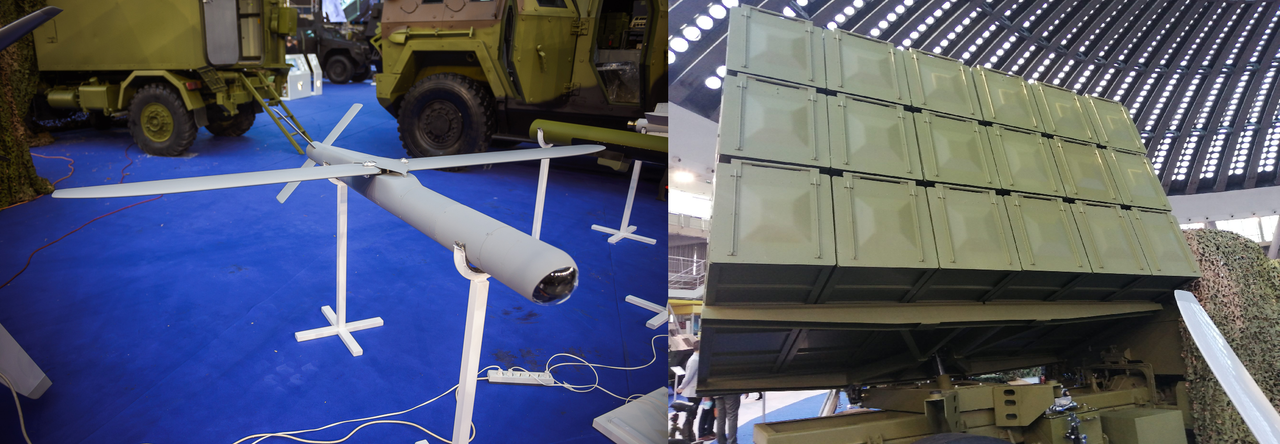
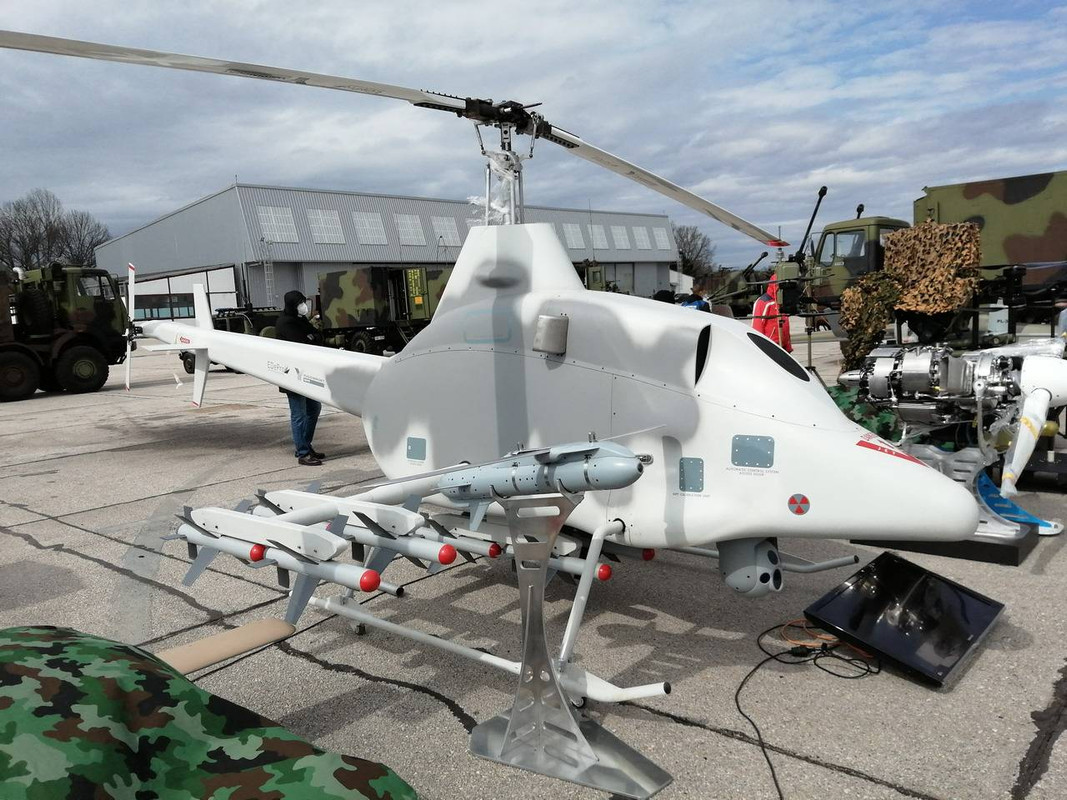
The Serbian arms industry is flourishing, with anything from small arms to advanced guided weaponry being designed and produced for the Serbian Army and for a number of international customers including the UAE, Cyprus, Turkmenistan and Bangladesh. This meanwhile has come to include a number of unmanned aerial vehicle designs that have already entered service with the Serbian Army in limited quantities. More ambitious designs are also in the pipeline, including the Pegaz 011 UCAV, the Gavran 145 loitering munition and the X-01 Strsljen helicopter UCAV.

Thursday, 20 October 2022

,

By Stijn Mitzer and Joost Oliemans

The Malaysian government seeks to turn the country into Southeast Asia's testing ground for drones, where international companies will design and produce unmanned aerial vehicles (UAVs) for carrying out deliveries and to provide other unique services. [1] Considering these unmanned ambitions, it is perhaps all the more surprising that the Malaysian government has invested little in the acquisition of UAVs for its armed forces, despite the presence of an indigenous drone industry that has come up with several different military-grade drone designs since the early 2000s.

Monday, 17 October 2022

,

By Stijn Mitzer and Joost Oliemans

Vietnam has sought to address its security requirements by fielding a large military apparatus equipped with mostly Soviet-era weaponry that can be quickly reinforced by a massive reserve force armed with anything from World War II-era Soviet rifles to U.S. Main Battle Tanks dating from the 1960s. Modern equipment is relatively lacking in the inventory of the Vietnamese People's Army (VPA), with Vietnam instead preferring to upgrade existing weaponry to keep it combat effective in the 21st century. A prime example of this is the T-54M3 tank upgrade project.

Wednesday, 12 October 2022

,

By Stijn Mitzer and Joost Oliemans

In November 2021 it was announced that Kazakhstan had signed a contract with Turkish Aerospace Industries (TAI) for the delivery of three TAI Anka unmanned combat aerial vehicles (UCAVs). [1] Their purchase comes some five years after the Kazakh Air Force first acquired an armed drone capability in the form of four Wing Loong Is from China. [2] Rather than acquiring additional Chinese-made UCAVs, in 2021 Kazakhstan thus turned to Türkiye to press on with its armed drone programme. Other suppliers of UAVs to Kazakhstan are Israel and Russia, which both have delivered a number of reconnaissance UAVs.

Sunday, 4 September 2022

,

By Stijn Mitzer and Joost Oliemans

The goal of this list is to comprehensively catalogue the current inventory of drones, rockets and missiles of the Houthi rebels as well as clarify their origin. The part within apostrophes refers to the designation given by Houthis to foreign-delivered equipment. A year in square brackers after the designation refers to its perceived date of inception in Yemen. The year is only added to armament delivered or produced after the Houthi takeover of Yemen in 2014/2015.
 
(Click on the equipment to get a picture of them in Houthi service.)

Friday, 2 September 2022

,

By Stijn Mitzer and Joost Oliemans
 
It is not often that a weapon system is proving so popular that countries are waiting in line to buy it. Ironically, this appears to be the current situation with the Bayraktar TB2 unmanned combat aerial vehicle (UCAV). Already in service with or on order by 31 countries other than Türkiye, the TB2's commercial success currently looks to be without bounds. With new export agreements being signed with more countries to this day, there is little doubt that the TB2 will go down in history as world's most successful UCAV both in terms of export clients and numbers sold. In this capacity it is now consistently beating its main two competitors on the drone market of China and Israel, whose products though more attractive than expensive (and exclusive) Western wares or underperforming and politically-laden Iranian ones have shown their own deficiencies. The TB2's success should come as little surprise to those that examined the system in combat, as the TB2 is arguably the first UCAV that manages to combine reliability and affordability with devastatingly effective results on the battlefield: a capability keenly looked for in the 21st century.