Showing posts with label Islamic Emirate of Afghanistan Air Force. Show all posts

Friday, 4 November 2022

,


By Stijn Mitzer, Lukas Müller and Joost Oliemans
 
For an article on the development of the Islamic Emirate Air Force click here.
 
The Islamic Emirate Air Force (IEAF) has surprised friend and foe alike by not only continuing to exist as a functional air force, but also by continuously expanding its operational inventory of aircraft through overhauling both damaged and decommissioned aircraft. Though still only a fraction of the size of the Coalition-supported Afghan Air Force, the IEAF's operational inventory meanwhile includes more than a dozen attack helicopters, more than twenty transport helicopters and half a dozen transport aircraft. While the Taliban was expected by many to be unable to operate its UH-60A+ Black Hawks for more than a few months, at least six Black Hawks currently continue to see service as well.
,

By Lukas Müller in collaboration with Stijn Mitzer and Joost Oliemans
 
This article summarises the development of the Islamic Emirate Air Force or the 'Taliban Air Force' as the service is popularly known as in the West, and attempts to answer oft-asked questions such as: 'Who are the Taliban's pilots?', 'What aircraft does the Taliban operate?' and 'How can they maintain these aircraft?' For an inventory assessment of the Islamic Emirate Air Force click here.

Saturday, 8 January 2022

,

By Lukas Müller in collaboration with Stijn Mitzer
 
This is an updated and expanded version of an article that was first published in the August/September 2020 newsletter of the Asian Air Arms Research Group. The article also updates information on Afghan L-39s featured in the author's book Wings over the Hindu Kush.
 
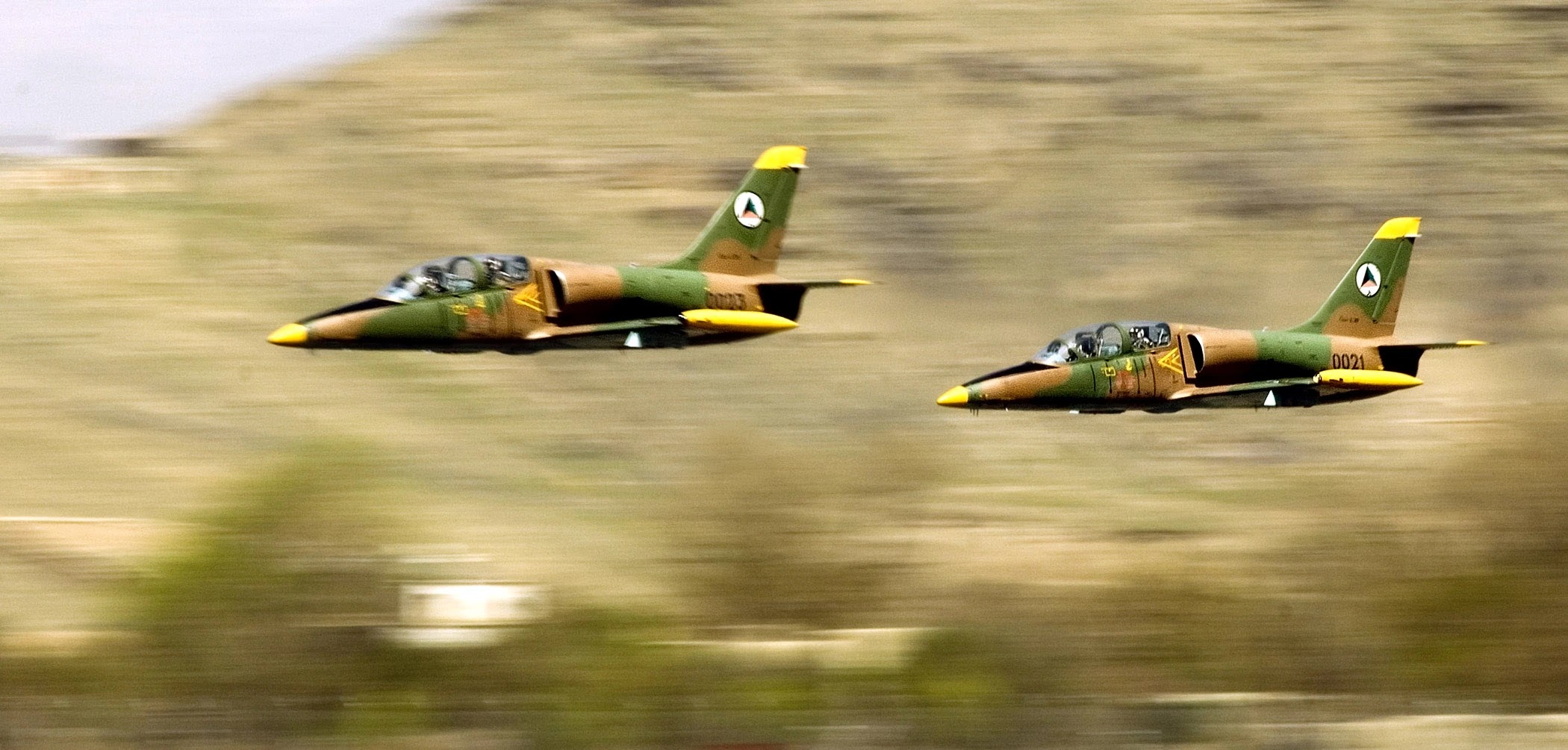
The Czechoslovak-made L-39 Albatros jet trainer was widely exported and enjoyed a long and successful career in service of many countries around the globe. Afghanistan received its first L-39s in 1977 with the last two examples being withdrawn only in the late 2000s or early 2010s, after at least 30 years of service. The story of Afghan L-39s might not be over yet, though: in December 2021, mechanics at Kabul airport, now under the command of the Taliban, began testing the engines of the remaining L-39s, with a clear ambition of bringing the long-grounded jets back to service. [1]