Showing posts with label BTR. Show all posts

Thursday, 24 November 2022

,

By Stijn Mitzer and Joost Oliemans

The Moldovan Armed Forces is one of the most elusive fighting forces in Europe. As the poorest country on the European continent, Moldova has the dubious honour of not having made one acquisition for its military since independence from the Soviet Union in 1991. Instead, it has been the recipient of military aid from Romania in the 1990s and the United States throughout the 2000s and 2010s, and has in recent years attempted to improve the fighting efficacy of its forces by launching a number of upgrade projects for its armoured fighting vehicles (AFVs).
Saturday, 5 November 2022

,

By Stijn Mitzer and Joost Oliemans
 
The possible participation of Belarus in the 2022 Russo-Ukrainian War has been speculated about on more than one occasion. Yet others argue that Belarus is already a participant in the war simply by allowing Russia to stage a part of the invasion from its territory and by allowing Russian missile launchers stationed inside the country to fire at targets inside Ukraine. Nonetheless, with a direct Belarusian participation in the war all but certain to trigger a chain of events that would ultimately see the end of the Belarusian regime, President Lukashenko is likely to do everything in his power to prevent an increased Belarusian participation (i.e. providing troops) in the war in Ukraine.

Tuesday, 1 November 2022

,
 
By Stijn Mitzer and Joost Oliemans
 
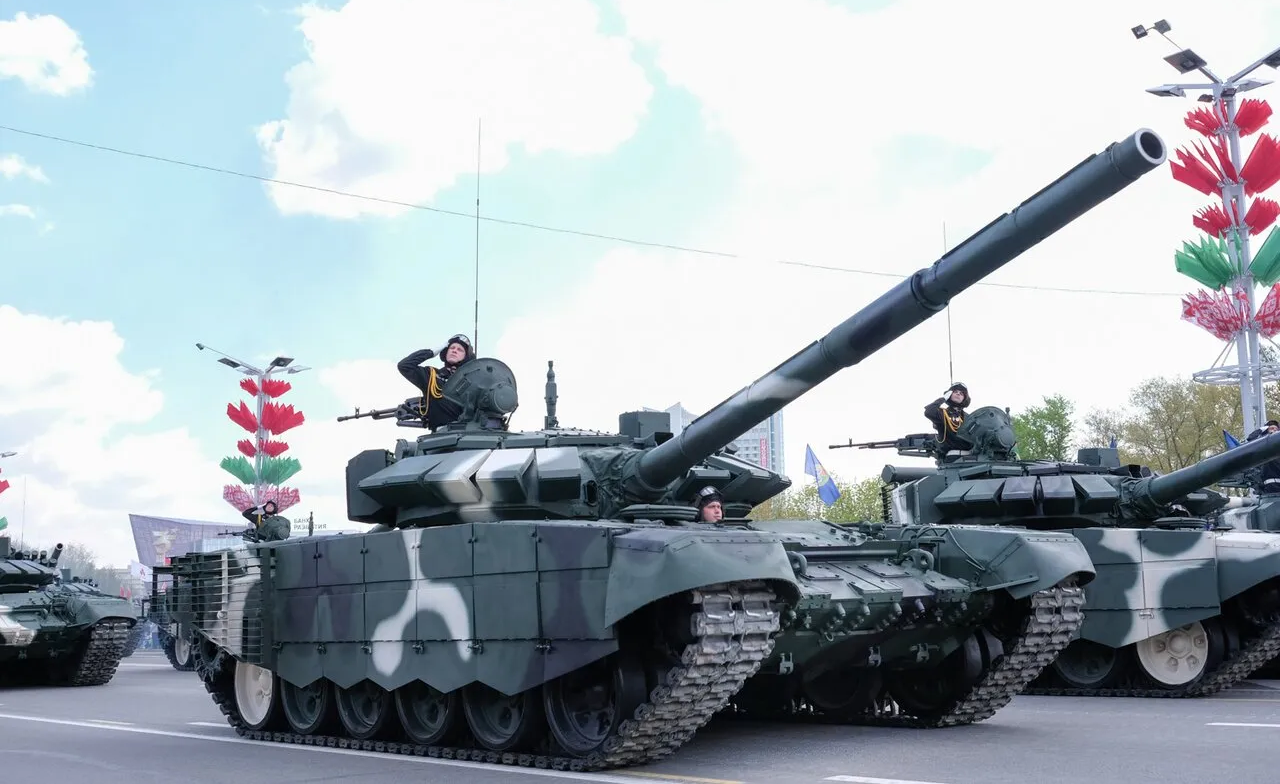
The Belarusian Army has for the most part experienced a drought in new acquisitions since its founding in 1992. Much of the scarcely available funding for new acquisitions has been used for the purchase of combat aircraft and air defence systems, most often acquired at friendly prices from Russia. The Ground Forces have been the recipient of 25 T-72B3 Obr. 2016 MBTs and some 65 BTR-82A(M) IFVs from Russia, while China has donated 22 EQ2058s and an unknown number of CS/VN3 infantry mobility vehicles (IMVs) since 2012. China is also the source of the technology behind the Belarusian Polonez guided MRL/SRBM system, which entered service with the Belarusian Army in 2015.

Friday, 30 September 2022

,

By Stijn Mitzer and Joost Oliemans
 
Abbrevations:
 
- CBAF (Carro Blindado de Apoyo de Fuego) = Armoured Fire-Support Vehicle
 
- CBE (Carro Blindado de Exploración) = Armoured Reconnaissance Vehicle
 
- CBI (Carro Blindado de Infantería) = Armoured Infantry Vehicle
 
- C-AP (Cañón Autopropulsado) = Self-Propelled Artillery
 
- C-AP-AT (Cañon Autopropulsado Anti-Tanque) = Self-Propelled Anti-Tank Cannon

Friday, 29 October 2021

,

By Stijn Mitzer and Joost Oliemans
 
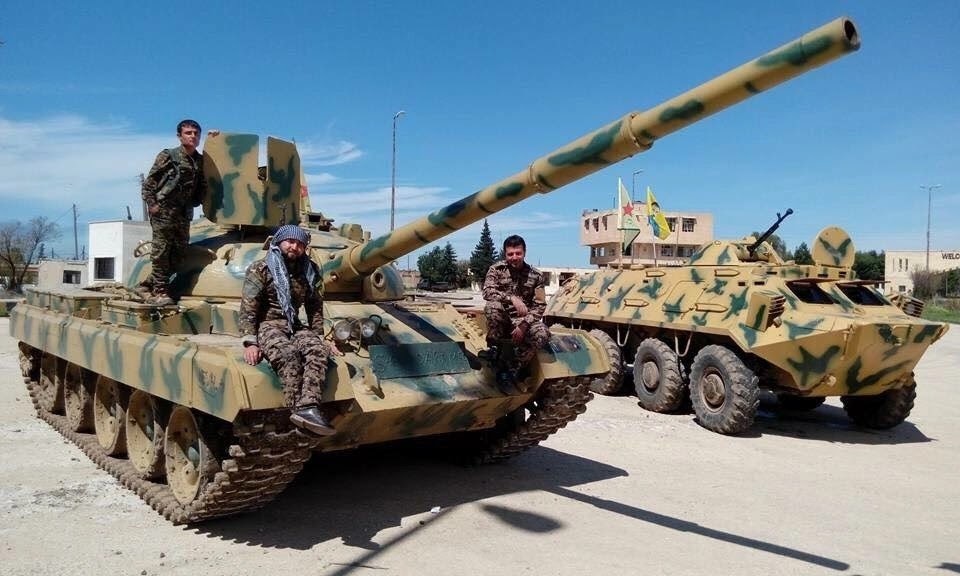
A number of attacks on Turkish patrols in northern Syria have brought Turkey and YPG forces to the brink of war. In response to the latest attack, which saw the death of one Turkish soldier, President Erdogan vowed to clear northern Syria from the YPG. [1] In order to achieve this, YPG (Yekîneyên Parastina Gel – People's Protection Units, itself the primary faction in the Syrian Democratic Forces alliance) forces would either have to leave the border region voluntarily or take up arms and fight the Free Syrian Army and Turkish military. In the latter case, the YPG's armour is undoubtedly set to play a role as the faction's primary fire-support platforms. This article attempts to catalogue the YPG's fleet of AFVs and other heavy weaponry and explain how its armoured force came to be.

Friday, 22 October 2021

,
 
By Thomas Nachtrab in collaboration with Stijn Mitzer and Joost Oliemans
 
The goal of this list is to comprehensively catalogue Mali's current and past inventory of (armoured fighting) vehicles and heavy weaponry. Historically a major recipient of Soviet military aid, frequent arms deliveries in the 1970s and 1980s turned Mali into one of the strongest militaries in western Africa, operating advanced equipment such as dedicated tank destroyers, S-125 SAM systems and MiG-21bis jet fighters. The 1990s and 2000s saw the Malian Army retiring much of this equipment amid a changed security situation and resulting decrease in its defence expenditure.
 
Like most other African militaries, the Malian Army's combat effectiveness in the late 2000s and early 2010s was extremely low, a fact that prevented it from dealing with the 2012 Tuareg insurgency and the subsequent rise of Al-Qaeda, ultimately forcing France to intervene to prevent a hostile takeover of Mali and throwing the rest of the region into turmoil. In the years since, the Malian military has been rebuild with the help of the European Union (EU), with Soviet heavy weaponry making place for modern MRAPs and infantry mobility vehicles. 

Nonetheless, Mali continues to operate equipment like the T-54 and PT-76, albeit in much small numbers than before. Interestingly, the Malian Army appears to have returned several other Soviet-era AFVs back to operational condition in recent years, although these appear to spend most of their time collecting dust in barracks with little training being undertaken as they are of little use in fighting the ongoing insurgency. Nonetheless, the ultimate result is an exotic inventory of equipment that could surprise many seasoned analyst for its sheer diversity.

Wednesday, 15 January 2020

,

By Stijn Mitzer and Joost Oliemans

There it was, what looked to be a tram or an armoured battle wagon parked under a tree in the town of Bawiza, North of Mosul in November 2016. Abandoned by its previous owners, this behemoth previously made an appearance in the now infamous Islamic State offensive near Naweran, North of Mosul, a video which went viral due to the rather comical performance of several fighters involved in the offensive. While Abu Hajaar became the inspiration of memes across all corners of the internet, the Islamic State's usage of up-armoured trucks and other vehicles involved in this offensive was of particular interest for others.

Wednesday, 31 May 2017

,

By Stijn Mitzer and Joost Oliemans

Sudan is arguably one of the most interesting countries when it comes to the variation of military equipment in use with its military, owing to its diverse range of suppliers ever since the country's independence from Great Britain in 1956. Originally trained and equipped by Egyptians and the British, Sudan then began receiving large shipments of Soviet military equipment, followed by Chinese deliveries of arms. In recent years, Sudan has bought large numbers of weaponry from nations such as Belarus, Ukraine and Russia, which along with the Chinese and Iranians are now the lead suppliers of weaponry in Sudan.

Sunday, 20 September 2015

,

 
By Stijn Mitzer and Joost Oliemans
 

This list only includes vehicles and equipment in service with the Yemeni Army before the Houthi takeover of Yemen in 2014 and 2015. Vehicles and equipment acquired and produced during the ongoing conflict are not included in this list. The goal of this list is to comprehensively catalogue the pre-war inventory of the Yemeni Army, list the country's esoteric AFV designs as well as clarify what military equipment is currently available to Yemeni parties on the battlefield. Civilian trucks towing military trailers are not included in the list.