Showing posts with label Afghanistan. Show all posts

Friday, 4 November 2022

,


By Stijn Mitzer, Lukas Müller and Joost Oliemans
 
For an article on the development of the Islamic Emirate Air Force click here.
 
The Islamic Emirate Air Force (IEAF) has surprised friend and foe alike by not only continuing to exist as a functional air force, but also by continuously expanding its operational inventory of aircraft through overhauling both damaged and decommissioned aircraft. Though still only a fraction of the size of the Coalition-supported Afghan Air Force, the IEAF's operational inventory meanwhile includes more than a dozen attack helicopters, more than twenty transport helicopters and half a dozen transport aircraft. While the Taliban was expected by many to be unable to operate its UH-60A+ Black Hawks for more than a few months, at least six Black Hawks currently continue to see service as well.
,

By Lukas Müller in collaboration with Stijn Mitzer and Joost Oliemans
 
This article summarises the development of the Islamic Emirate Air Force or the 'Taliban Air Force' as the service is popularly known as in the West, and attempts to answer oft-asked questions such as: 'Who are the Taliban's pilots?', 'What aircraft does the Taliban operate?' and 'How can they maintain these aircraft?' For an inventory assessment of the Islamic Emirate Air Force click here.

Saturday, 8 January 2022

,

By Lukas Müller in collaboration with Stijn Mitzer
 
This is an updated and expanded version of an article that was first published in the August/September 2020 newsletter of the Asian Air Arms Research Group. The article also updates information on Afghan L-39s featured in the author's book Wings over the Hindu Kush.
 
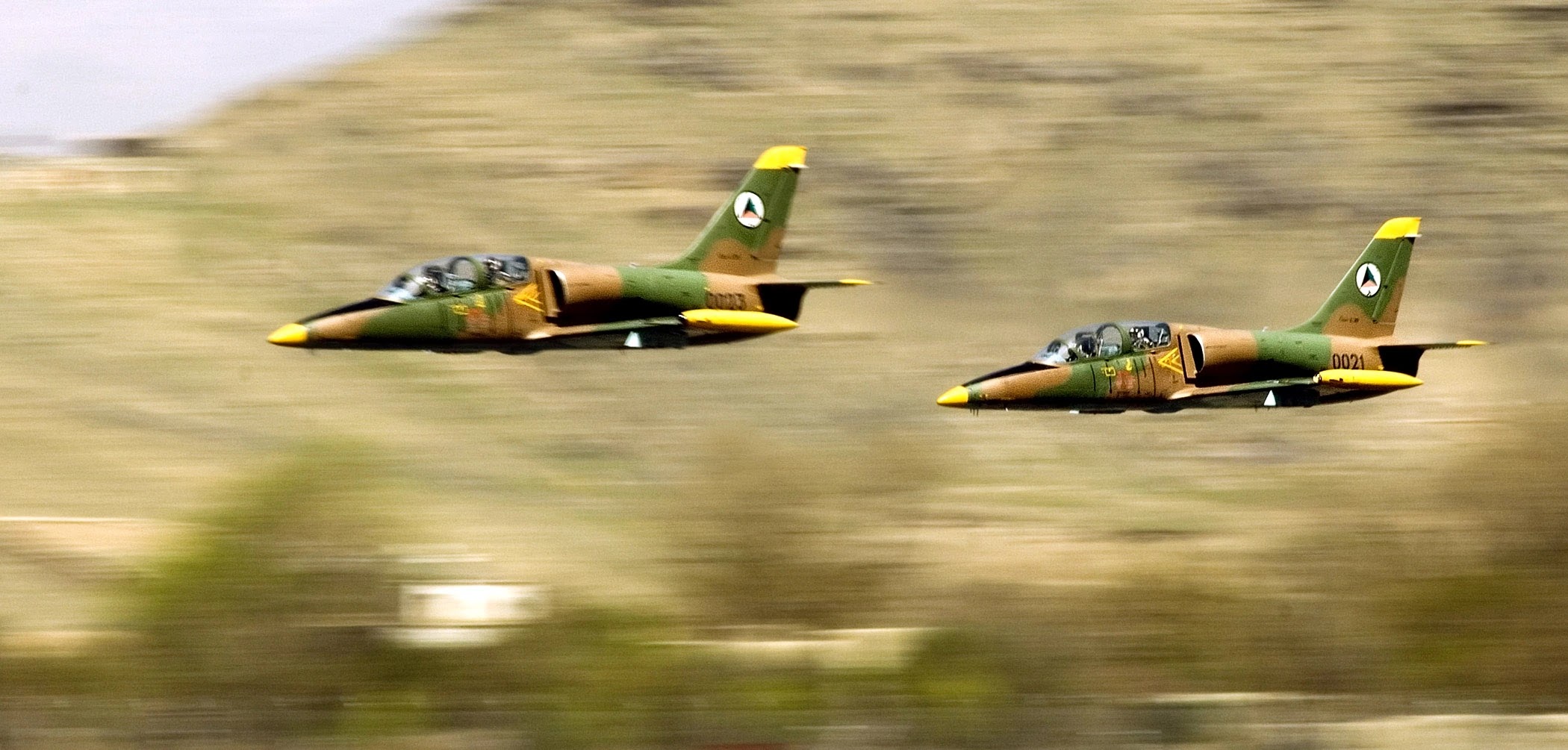
The Czechoslovak-made L-39 Albatros jet trainer was widely exported and enjoyed a long and successful career in service of many countries around the globe. Afghanistan received its first L-39s in 1977 with the last two examples being withdrawn only in the late 2000s or early 2010s, after at least 30 years of service. The story of Afghan L-39s might not be over yet, though: in December 2021, mechanics at Kabul airport, now under the command of the Taliban, began testing the engines of the remaining L-39s, with a clear ambition of bringing the long-grounded jets back to service. [1]

Saturday, 18 December 2021

,

By Stijn Mitzer and Joost Oliemans
 
Türkiye has made a shift from being partially dependant on donations of military equipment in the 1970s and 1980s to being the party that donates in the 2010s and 2020s, gifting military equipment to allied countries around the globe. Although Türkiye began donating military equipment to neighbouring countries as early as the late 1990s, this policy truly set off in the 2010s as Türkiye began to increase its worldwide influence. This has not only included the donation of military equipment, with ambulances, buses and other items finding their way to nations across the world as well.

Thursday, 9 December 2021

,

By Stijn Mitzer and Joost Oliemans
 
A report by Al Jazeera from Kabul International Airport (IAP) shows that the new Afghan Air Force is currently working on introducing a fast jet capability to its air force. [1] The footage shows an L-39 undergoing an engine test after languishing in storage at Kabul IAP since the early 2010s. [2] Even though the United States saw little use in the operation of Mi-24 attack helicopters and L-39C jet trainers by the Afghan Air Force, both types were maintainted in operational condition, even though the L-39s are not believed to have flown in the past several years.

Monday, 15 November 2021

,

By Stijn Mitzer and Joost Oliemans

Armoured warfare in Afghanistan diminished drastically after the 2001 United States invasion of the country. While past regimes and factions relied heavily on the use of armour as fire-support platforms, the U.S.-led Coalition saw little use for heavy armour by the new Afghan National Army (ANA). Plans to re-equip the only remaining armour unit of the ANA with M60A3 tanks were eventually shelved as a result, and only through sheer dedication did the ANA managed to cling on to a single tank battalion. [1]

Saturday, 18 September 2021

,

By Stijn Mitzer and Joost Oliemans
 
Images from a recently released video shows additional details of now-former Afghan Air Force aircraft and helicopters that were still present at Kabul International Airport at the time of its fall to the Taliban. In addition to showing the damage caused to aircraft by U.S. forces as they sought to prevent future use of Afghan Air Force assets, the footage also reveals that three Mi-24V attack helicopters were captured intact by the Taliban. Other aircraft such as the C-208/AC-208 utility/attack aircraft and C-130 transport aircraft similarly appear to have suffered less damage than initially thought.

The flyable inventory of the Islamic Emirate of Afghanistan Air Force currently consists of eight MD 530F attack helicopters, around a dozen Mi-8/17s and four UH-60 'Blackhawk' transport helicopters. The activation of more Mi-8/17s and a number of UH-60s is likely, although the operational lifespan of any Blackhawk will likely be limited without access to qualified technicians. Nonetheless, the capture of at least twelve UH-60s and fourteen Mi-8/17s at Kabul will likely provide the Taliban with a steady source of spare parts for years to come.